Flooring Inspiration
Flooring Materials: Hardwood, Laminate, Vinyl and Tile Explained
How common residential flooring materials are built, how they wear, and which rooms they suit best.
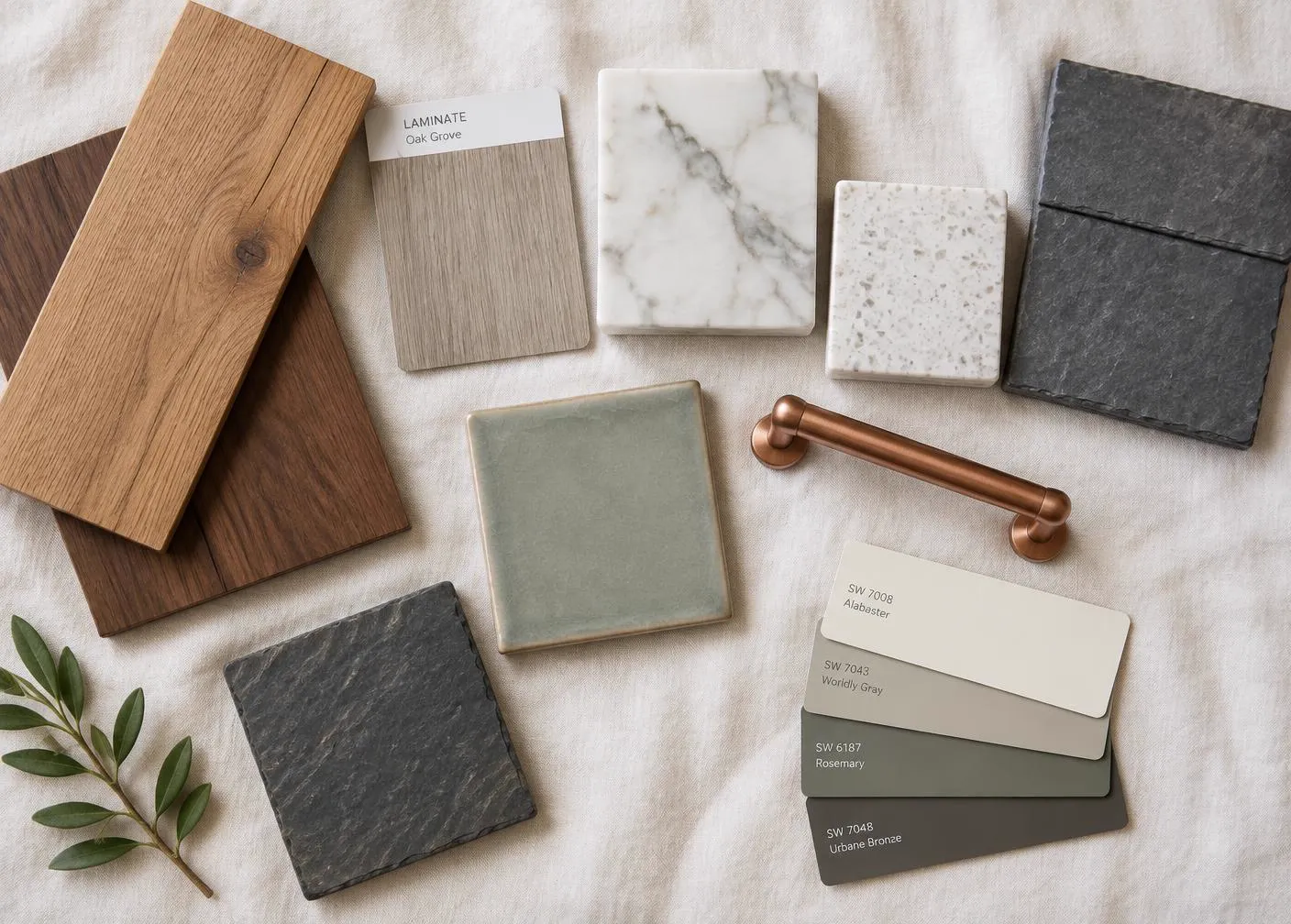
Solid and engineered hardwood
Solid hardwood is milled from a single piece of timber and can usually be sanded and refinished several times. Engineered hardwood bonds a real wood wear layer to a plywood or fiberboard core, which makes it more dimensionally stable in rooms with changing humidity. The thickness of the wear layer largely decides how many refinishes a floor can take.
Laminate
Laminate uses a high-density fiberboard core topped with a printed image layer and a clear melamine wear layer. Abrasion ratings, often shown as AC1 to AC5, describe how well the surface resists foot traffic. Standard laminate is sensitive to standing water at the seams, while some newer products add water-resistant cores and sealed edges.
Luxury vinyl plank and tile
Luxury vinyl is a layered synthetic product with a rigid or flexible core. Rigid core versions such as SPC and WPC handle moisture well, making them common in kitchens, laundry rooms and basements. The wear layer, measured in mils, is the main indicator of scratch resistance.
Porcelain and ceramic tile
Porcelain is denser and less absorbent than standard ceramic, which makes it a frequent choice for bathrooms, entries and outdoor areas. Slip resistance is often described by a DCOF value. Grout selection and sealing play a large part in long-term appearance.
Side by side comparison
| Material | Durability | Care | Best for |
|---|---|---|---|
| Solid hardwood | High, refinishable | Dry mop, felt pads, control humidity | Living and bedrooms |
| Engineered hardwood | Medium to high | Dry mop, limited refinishing | Most rooms, over concrete |
| Laminate | Medium | Avoid standing water | Busy family spaces |
| Luxury vinyl | Medium to high | Damp mop, pH neutral cleaner | Kitchens, basements |
| Porcelain tile | Very high | Seal grout periodically | Baths, entries |
Material checklist
- Check the room's moisture exposure before choosing a core type.
- Compare wear layer thickness, not just surface appearance.
- Ask about acclimation time for wood-based products.
- Confirm whether underlayment is included or sold separately.